

Product Overview
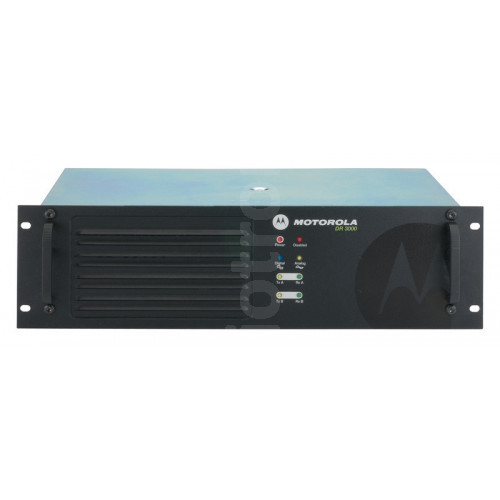
Motorola DR3000 is a discontinued digital two-way radio repeater that's been replaced by Motorola SLR5500. The Motorola DR3000 repeater is a continuous-duty unit that supports two simultaneous voice or data paths in digital TDMA mode. DR3000 easily mounts in wall or rack systems.
Also see: Motorola DR3000 Accessories
This Motorola DR3000 repeater is part of the MOTOTRBO series, delivering increased capacity and spectrum efficiency, integrated data communications and enhanced voice communications through a complete solution. With the ability to operate in both analogue and digital mode, the DR3000 has a 16 channel capacity meaning that it is more than sufficient for a variety of different sized operations. Clear LED indicators on the front panel indicate the mode in which the repeater is operating, whilst also having sturdy carry handles to ensure the safe transport should the DR3000 need to be moved. The DR3000 has an integrated power supply whilst also having an interface for battery back-up. IP Site Connect allows for the use across multiple sites, whilst Capacity Plus allows for single site trunking.
The DR3000 has now been discontinued and replaced by the Motorola SLR 5500.
Accessories Still Available
Also see: Motorola DR3000 Accessories
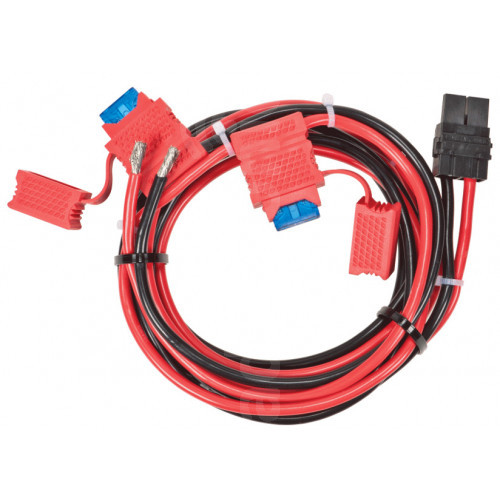
There are still a number of accessories available for the Motorola DR3000.
Model Table
Here is a list of the known Motorola MOTOTRBO DR3000 models.
| Model Code | Name | Power Version | Band | Frequency |
|---|---|---|---|---|
| MDM27JNR9JA7AN | DR3000 | 1-25W | VHF | 136-174MHz |
| MDM27QNR9JA7AN | DR3000 | UHF | 403-470MHz | |
| MDM27JQR9JA7AN | DR3000 | 25-50W | VHF | 136-174MHz |
| MDM27QPR9JA7AN | DR3000 | UHF | 403-470MHz |